
The Act of Will: Core Text & Conceptual Hub
Published in 1973 by Dr. Roberto Assagioli, The Act of Will (Italian: L’Atto di Volontà) is the foundational text of psychosynthesis on human volition. It rehabilitated the study of the will in twentieth-century psychology, moving beyond passive deterministic models to establish volition as the central coordinating function of human consciousness.
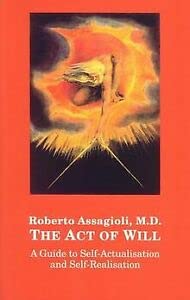
Unlike the Victorian view of willpower as aggressive suppression or moralistic strain, Assagioli presented a holistic, multifaceted understanding. The will is not an engine that does all the work directly; rather, like the conductor of an orchestra or the steersman of a ship, it directs, harmonizes, and coordinates all other psychological functions—thinking, feeling, imagination, impulse, and intuition.
To explore and apply these concepts systematically, see The Act of Will Study Guide, which provides chapter-by-chapter lessons and practical exercises.
Conceptual Architecture of the Book
The Act of Will is structured into three integrated parts:
The Nature of the Will
Explores the fundamental aspects and dimensions of willing: Strong Will, Skillful Will, Good Will, Transpersonal Will, Universal Will, and Joyous Will.
The Anatomy of the Will
Breaks down the volitional process into its six sequential stages: Purpose, Deliberation, Decision, Affirmation, Planning, and Direction of Execution.
Practical Training & Appendices
Provides experiential exercises, daily techniques, psychological workbooks, and the Questionnaire on the Will used in psychosynthesis counseling.
The Dual Polarity: Nature and Stages
Assagioli emphasizes that an act of will requires both qualitative alignment (ensuring the will is skillful, ethical, and grounded) and process competence (carrying the act through all six sequential links without getting blocked).
Practical Volitional Techniques
In the practical application of the willed act, Assagioli outlined several specialized psychological methods preserved in this archive:
- Evocative Words and Symbols: Utilizing phrases and visual symbols of will to stimulate subconscious and superconscious faculties.
- Acting “As If”: Performing physical actions and adopting inner postures that invoke desired volitional states.
- The Psychological Workbook: Reflective journaling to observe one’s inner director, identify personal failure stages, and foster steady growth (see Journaling: Your Psychological Workbook).
- Useless Exercises: Performing minor, deliberate, non-essential tasks to strengthen conscious control over habitual impulses (see Useless Exercises).