
Inspirational Quotes on the Power of Will
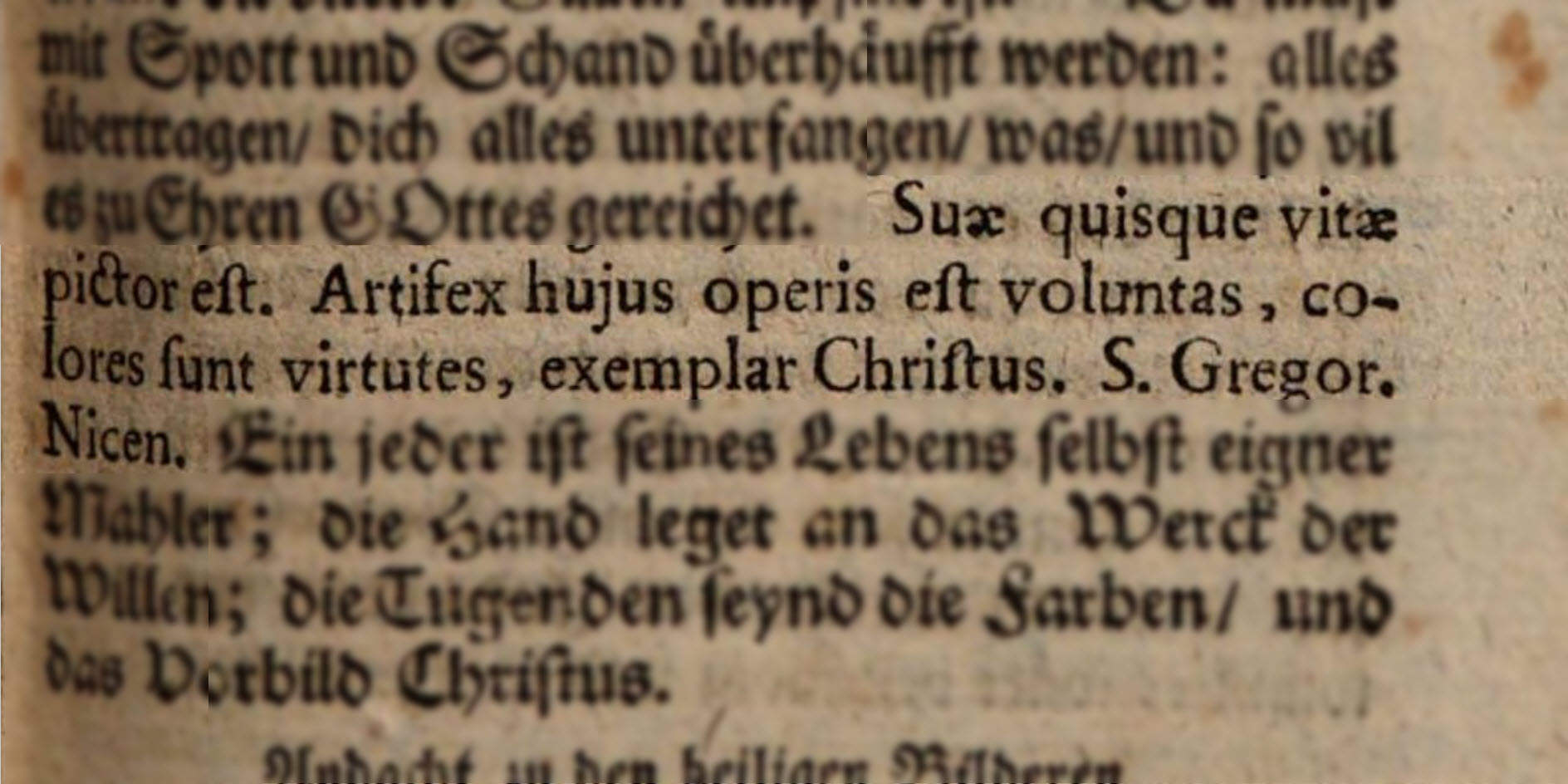
“Suae quisque vitae pictor est; artifex hujus operis est voluntas, colores sunt virtutes, exemplar Christus.”
“Each is the painter of his own life; the will is the craftsman of this work, the virtues are the colors, and Christ is the model.”
Our collection of quotes about the will presents a spectrum of views, offering a rich ground for reflection and analysis. As you explore these quotations, take the time to ponder the diverse ideas and emotions they stir within you. Encourage yourself to engage with each perspective critically, assessing the impact and meaning behind the words. Jot down your thoughts and feelings, exploring how these varied insights contribute to your understanding of the will. This approach not only deepens emotional awareness but also sharpens intellectual understanding, inviting a comprehensive exploration of the human will’s complexities. You can also reflect on which aspect of the will, quality of the will, or stage of the act of will the quote relates to.
My will is mine…I shall not make it soft for you.
The will to act is a renewable resource.
You make the mistake of thinking you have to choose, that you have to do what you want, that there are conditions for happiness. What matters—all that matters, really—is the will to happiness, a kind of enormous, ever-present consciousness.
The stronger your will, the clearer and more defined your goals will be and the greater the ‘coincidences’ that will appear in front of you, helping you get where you wish – Heaven or hell. You decide what you want.
Light, Love, and Will – the one is as necessary as the other; the one is dangerous without the others. Light, Love, and Will are the three eternal, vital sources of the higher, truer, purer cosmic life.
In the Lakes of Light, Love and Will, I would baptize all mankind.
Training the will in trivial and grave matters increases its strength and flexibility, and enables man to constantly strive and persevere.
The will is the spirit of perseverance, and perseverance holds clear success.
Genius everywhere is one. In the Orient and in the Occident the deep thinkers are kin, the poets are cousins, the pioneers of the spirit are the messengers of peace and good will to the world. Their works are the open highways between nations, and they themselves are the ever living guardians and guides.
But if it is manifest that a man is the author of his own actions, and if we are unable to trace our conduct back to many other origins than those within ourselves, then actions of which the origins are within us, themselves depend upon us, and are voluntary.
Nothing can withstand the power of the human will if it is willing to stake its very existence to the extent of its purpose.
Recognizing that the power of will is the supreme court over all other departments of my mind, I will exercise it daily when I need the urge to act for any purpose, and I will form habits designed to bring the power of my will into action at least once daily.
A self-willed man has no other aim than his own growth. He values only one thing – the mysterious power in himself, which bids him live and helps him grow. His only living destiny is the silent, ungainsayable law in his own heart, which comfortable habits make it so hard to obey but which to the self-willed man is destiny and godhead.
The enemy of development is pain phobia: the unwillingness to do a tiny bit of suffering. As you feel unpleasant you interrupt the continuum of awareness and you become phobic and this weakens the heart of the will.
A self-willed man obeys a different law, the one law I too hold absolutely sacred – the human law in himself, his own individual will.
The magnum opus is pre-eminently the creation of man by himself, that is, the full and complete conquest which he can make of his faculties and his future; it is pre-eminently the perfect emancipation of his will.
Everything is possible to him who wills only what is true! Rest in Nature, study, know, then dare; dare to will, dare to act and be silent!
If you want to make progress, put up with being perceived as ignorant or naive in worldly matters, don’t aspire to a reputation for sagacity. If you do impress others as somebody, don’t altogether believe it. You have to realize, it isn’t easy to keep your will in agreement with nature, as well as externals. Caring about the one inevitably means you are going to shortchange the other.
Where is the good? In the will. Where is the evil? In the will. Where is neither of them? In those things that are independent of the will.
Love is probably the best example of how unreal our ego looks at our lives. Because we surrender ourselves to the fact that we cannot decide all future outcomes with only our own free will.
Where your will is ready, your feete are light.
That which two will, takes effect.
To him that will, waies are not wanting.
Success means having the courage, the determination, and the will to become the person you believe you were meant to be.
A boy’s will is his life, and he dies when it is broken, as the colt dies in harness, taking a new nature in becoming tame.
There is not great talent without great will power.
It’s not that some people have willpower and some don’t. It’s that some people are ready to change and others are not.
Man cannot will unless he has first understood that he can count on nothing but himself: that he is alone, left alone on earth in the middle of his infinite responsibilities, with neither help nor succor, with no other goal but the one he will set for himself, with no other destiny but the one he will forge on this earth. It is this certainty, this intuitive understanding of his situation, that we call despair. You can see that it is no fine romantic frenzy but the sharp and lucid consciousness of the human condition. Just as anguish is indistinguishable from a sense of responsibility, despair is inseparable from will. With despair, true optimism begins: the optimism of the man who expects nothing, who knows he has no rights and nothing coming to him, who rejoices in counting on himself alone and in acting alone for the good of all.
The heart is the birth of will.
…the will, in truth, signifies nothing but a power or ability to prefer or choose: and when the will, under the name of a faculty, is considered as it is, barely as an ability to do something, the absurdity in saying it is free, or not free, will easily discover itself.
Courage is a moral quality; it is not a chance gift of nature like an aptitude for games. It is a cold choice between two alternatives, the fixed resolve not to quit; an act of renunciation which must be made not once but many times by the power of the will. Courage is willpower.
Strength does not come from physical capacity. It comes from an indomitable will.
Willingness is essential in any initiation or in making an dream come true. I can’t often means I won’t. You can change I won’t to I will with will power.
The man who has submitted his will and purposes entirely to God, carries God with him in all his works and in all circumstances.
Where there’s a will, there’s a way.
When the will is ready the feet are light.
The education of the will is the object of our existence.
Will to will! The Will must be: developed, grounded, re-oriented and used!
Since the outcome of successful willing is the satisfaction of one’s needs, we can see that the act of will is essentially joyous. And the realization of … being a self … gives a sense of freedom, of power, of mastery which is profoundly joyous.
Floods will rob us of one thing, fire of another. These are conditions of our existence which we cannot change. What we can do is adopt a noble spirit, such a spirit as befits a good man, so that we may bear up bravely under all that fortune sends us and bring our wills into tune with nature’s.
Men are wills.
Man, insofar as he acts willfully, acts according to some imagined good.
Out of chaos came the light. Out of the will came life.
People do not lack strength; they lack will.
The difference between a successful person and others is not a lack of strength, not a lack of knowledge, but rather a lack in will.
Will and intellect can form habits of thought and will. We are responsible for forming our habits and even when acting according to habits we are acting freely.
Help Us Ensure Accuracy and Authenticity
We strive for accuracy and authenticity in this collection. If you notice a quote that lacks an exact citation or appears misattributed, please let us know so we can verify the historical sources.